Run the floor right first.
Then automate it.
Anywhere Bio exists to make medicines affordable by fixing the part that rarely makes the headlines: how they are made. We start with the process, the instruments and the people on the floor, then build our own devices, then automate. We begin with peptides, proteins and essential medicines.
Three levels of optimisation. Each one pays for the next.
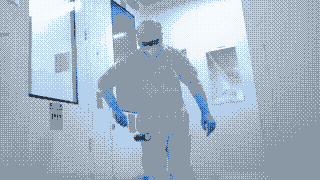
Process, people and instruments
We start in labs that already have the rooms and licences. We bring one standard process, better instruments, trained and certified operators, and a floor designed and run like a factory. Skilled people doing the right step at the right time is the first level of optimisation, and it needs no new science.
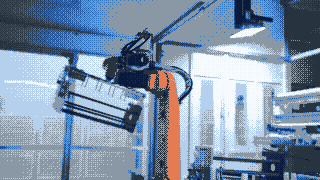
Our own devices
Running batches to one standard produces a record of where time and money go. Where that record shows a step that bought instruments do badly, we design and build our own, in house, and put them on the same floors.
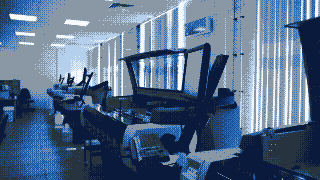
A fully automated floor
With the process proven and the instruments ours, robotics and software take over the routine steps, with people supervising. Process optimisation and robotic automation are where we are moving fastest.
Why manufacturing. Because discovery is no longer the bottleneck.
AI agents can now analyse tens of thousands of trials and propose candidate medicines, so a very small team can reach a molecule.9 Making it is another matter. In a McKinsey study, pharma sites ran at a median equipment effectiveness of 32%,1 and about half of quality incidents involve human error.2 Where a floor fixed that, deviations fell by more than 40% in two years. That gap between discovery and making is where we work.
We start with peptides, proteins and essential medicines, where the methods are proven and the need is present: GLP-1 demand has strained peptide capacity,6 and half the people who need insulin for type 2 diabetes do not get it.3 mRNA and personalised cancer vaccines, the first of which passed Phase 3 only in 2026,12 are the long-term target, once the levels below make them affordable.
Who is building it. A biomedical engineer, back to the roots.

Debabrata
Founder, Anywhere Bio
I graduated in biomedical engineering from NIT Rourkela, with one interest that has stayed with me since: doing my part toward a cure for cancer.
After graduating I worked at developer-tooling startups and in go-to-market roles. That work taught me how products get built, how teams get good at a process, and how work reaches the people who need it.
Anywhere Bio is me coming back to my roots: biomedical engineering, and biomedical signals and systems. Making medicine well is an engineering and operations problem as much as a scientific one, and it is the one I have chosen to work on.
- Studied
- Biomedical engineering, NIT Rourkela
- Before
- Developer-tooling startups and go-to-market roles
- Now
- Building Anywhere Bio
Want to build this with us? Write to us.
We are talking to drug developers, GMP-capable labs and lab professionals now. Tell us what you are making, or what you could make, and when.